As we approach Reykjavik during our final days of the first leg of the 2026 OSNAP cruise, we ask ourselves – who will win the World Cup?
Between our moments of hard work on the high seas, most eyes have been glued to the television, hoping our favorite teams will prevail in bringing home the most significant trophy in the world of fùtbol. We have laughed, cried, used sailors’ verbage, lost money, won bragging rights, all within the lounge of the ship. Tiago’s post-cruise Brazilian barbecue was temporarily canceled upon Brazil’s defeat against Erling Haaland – thank goodness Tiago is a reasonable man, who sees the value in commemorating collective accomplishments while navigating internal strife.
Our chief scientist’s mood has been buoyed by the completion of all the mooring work we had planned for this cruise. In total, the crew and science team successfully recovered and deployed 11 moorings within the subpolar North Atlantic (2 OOI, 5 OSNAP-NIOZ, and 4 OSNAP-UMaine), in addition to deploying a Crossroads mooring south of the Grand Banks. At the time of writing this post, we have completed over 60 CTD casts across the Reykjanes Ridge, capturing features of the AMOC such as the East Reykjanes Ridge Current, the Irminger Current, the Iceland-Scotland Overflow Water, Labrador Sea Water, and Subpolar Mode Water. Aside from the rough-weather days, our team has worked around the clock to extract as much data as humanly possible during our precious time aboard the R/V Neil Armstrong. Our other accomplishments include deploying 4 ARGO floats and 12 RAFOS floats, retrieving a oceanographic glider, spotting several cetacean species, consuming 4 cups of ramen in a single evening, beating the crew in a round of Boomerang Foo, and getting that dang Autosal to work (Tiago was particularly happy about this – more to come on this saga).
In total, we’ve traveled a little over 4800 nautical miles (~5224 miles) at an average speed of about 8 knots, which is roughly equivalent to traveling across the continental United States at biking speed – and then turning around and traveling back. In our case, the country has been blue and fluid, desolate (deceivingly) and expansive, rough some moments, placid during others, but always in motion (we have data to prove it!).
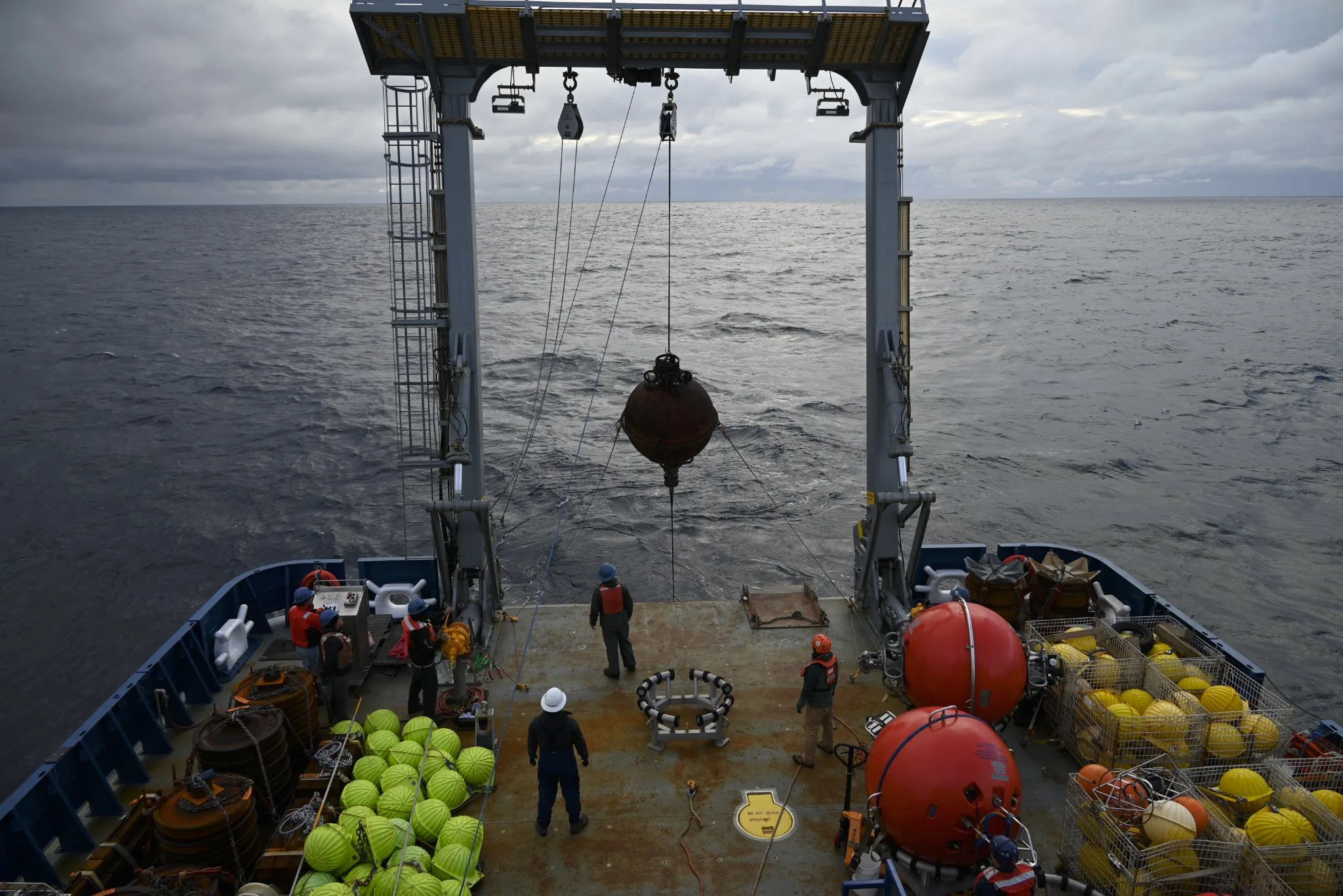
The crew recovering one of the OOI moorings. From left to right: Emily, Katie, Dan, Eduardo, Nico, Cedrick, and JD.
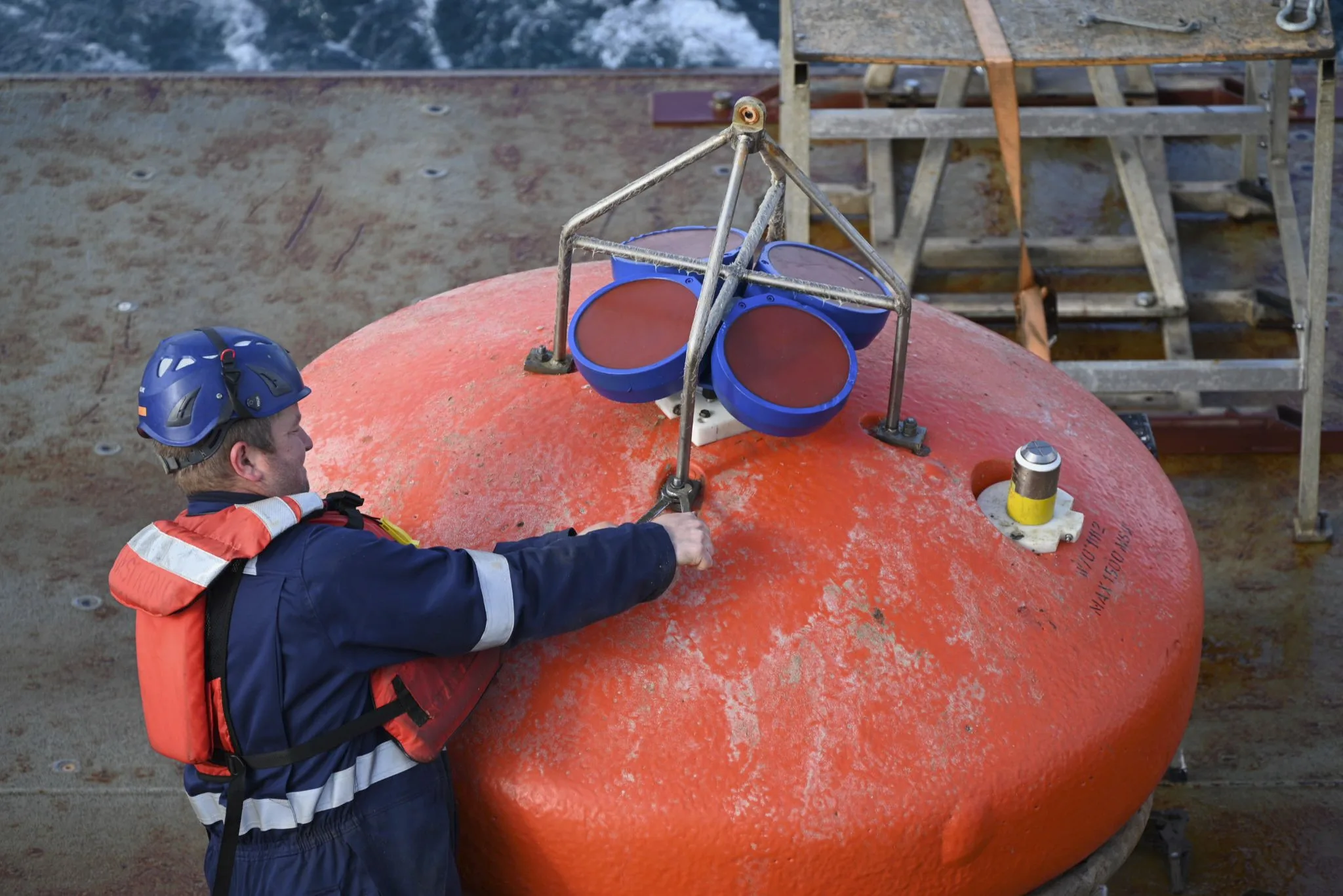
JD working hard on his mooring!
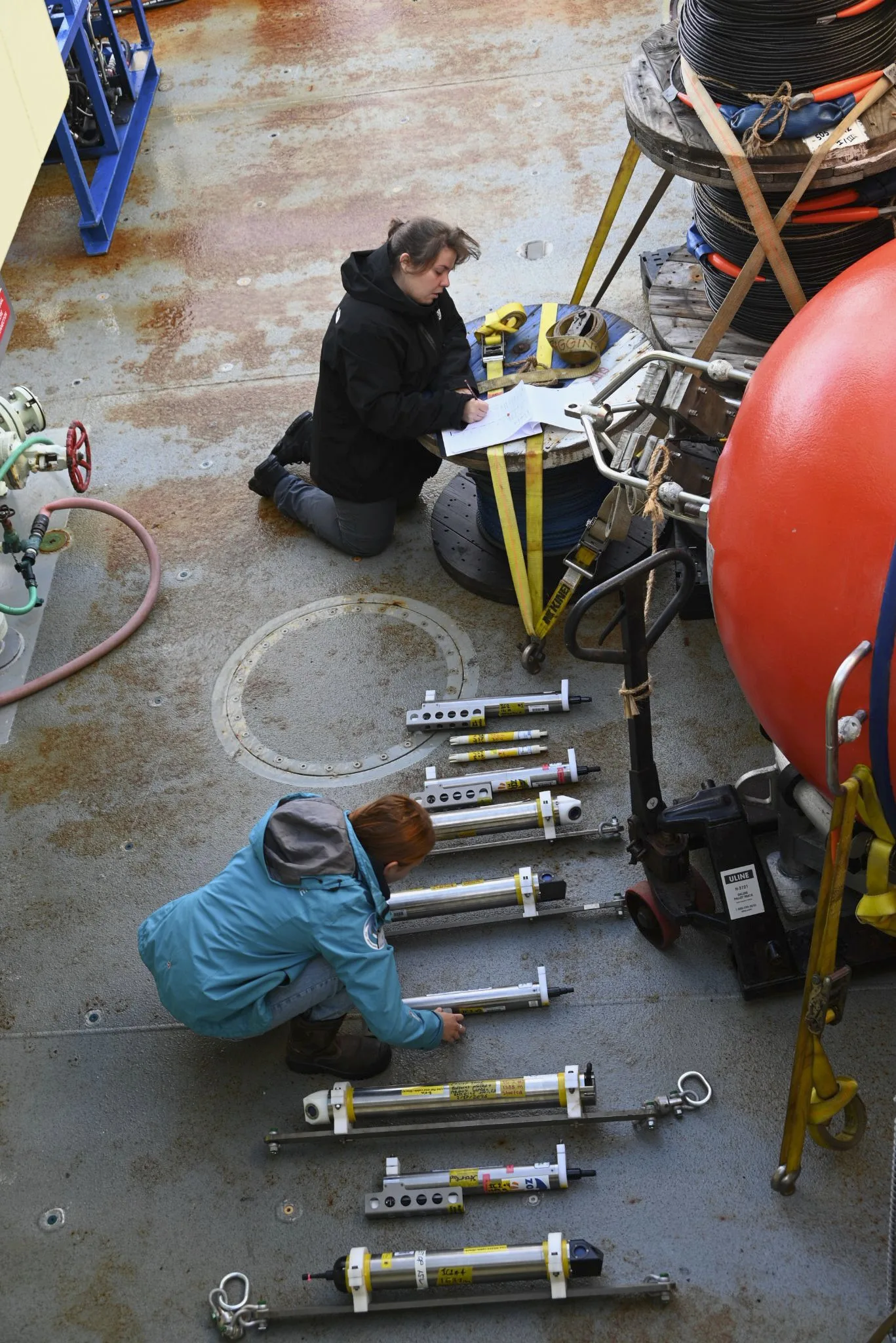
Matilde (in black) and Reinet (in blue) organizing MicroCATs, Aquadopps, and temperature loggers before deployment.
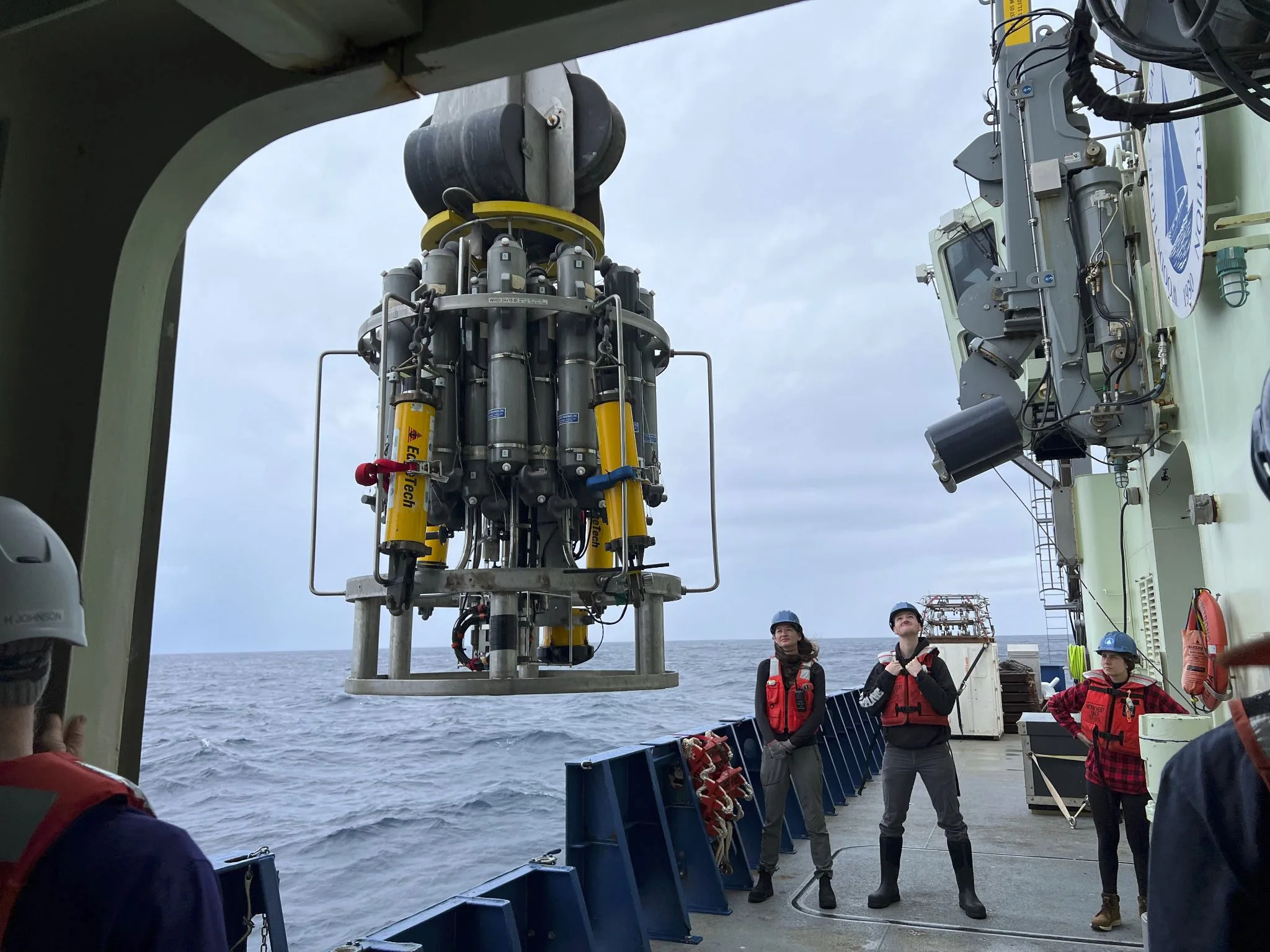
Deploying the CTD to test acoustic releases (yellow cylinders). From left to right: Howie, Emily, Collin, and Ana.
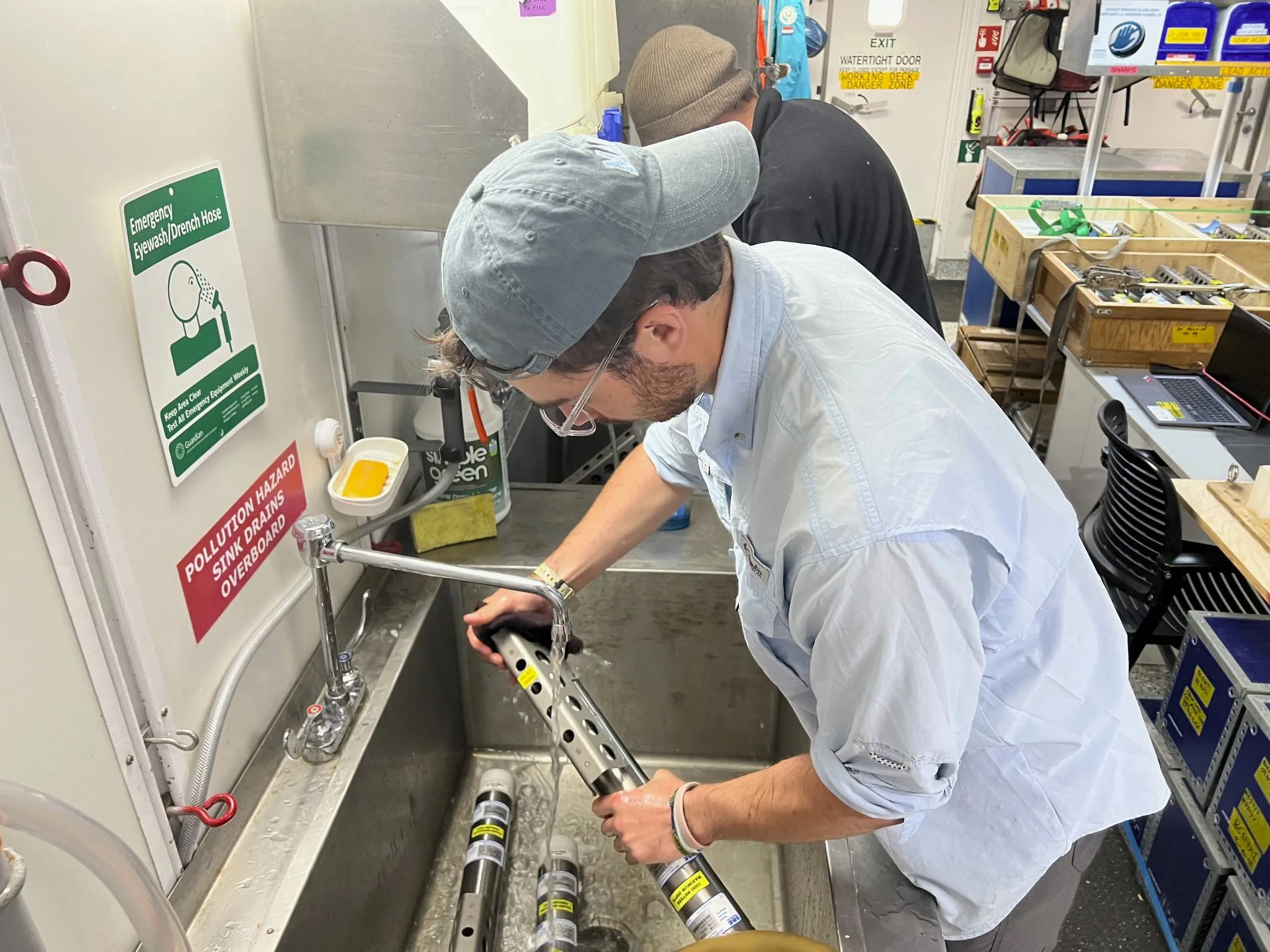
Cleaning recently-recovered MicroCATs! From back to front: Jelle and Andrew Treat
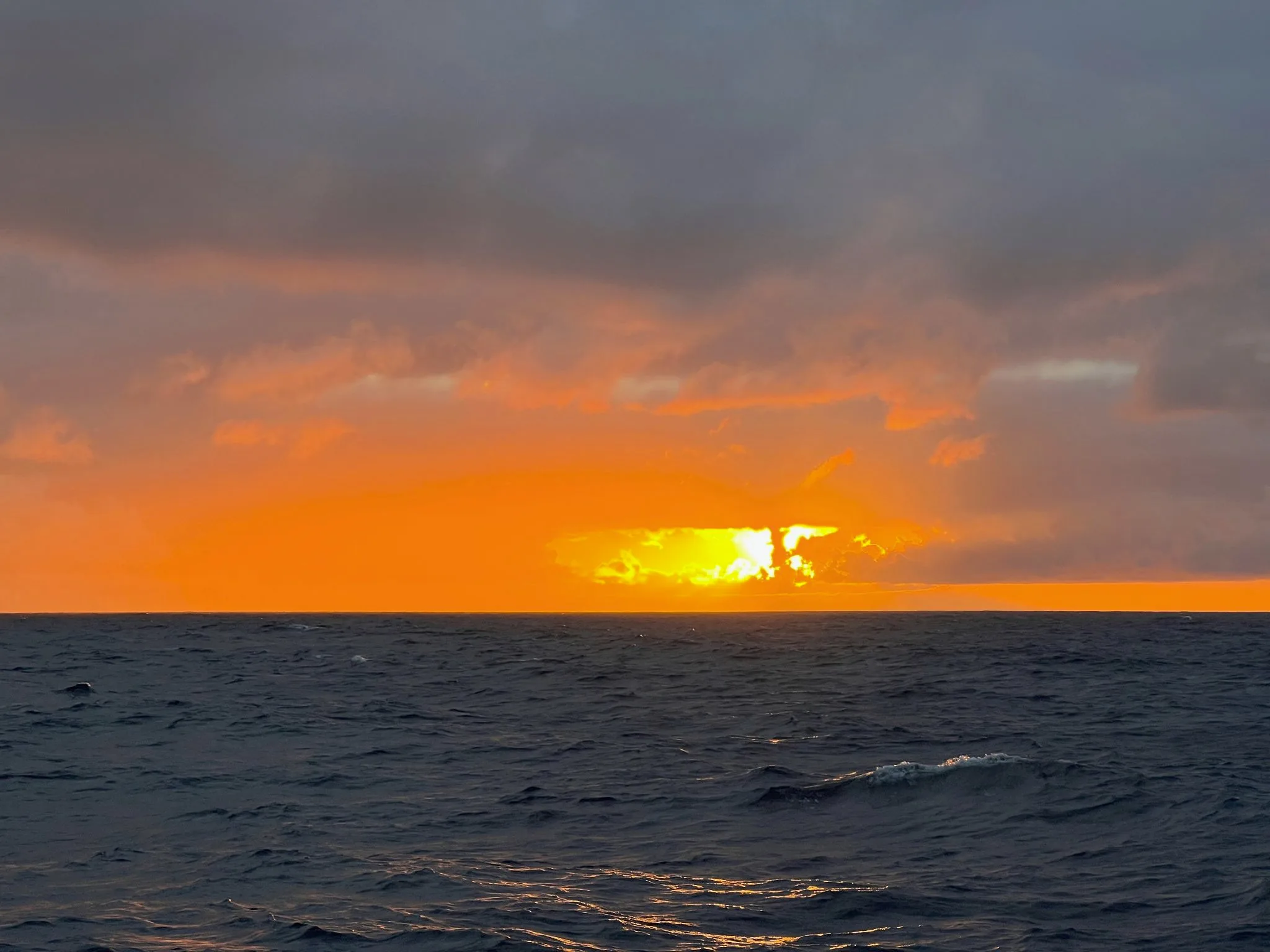
Sunrise upon the Subpolar North Atlantic!
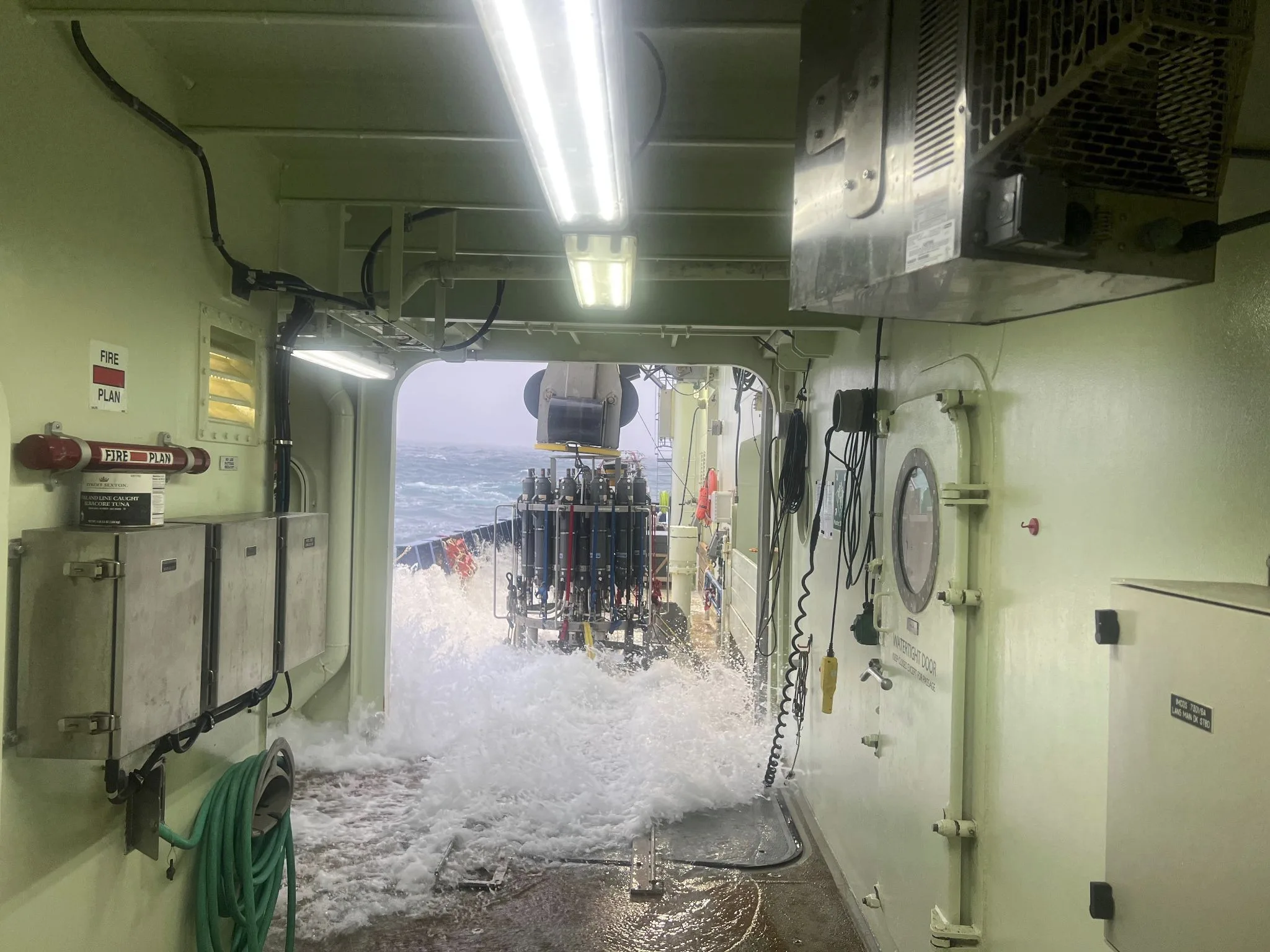
A day of high seas.