By Daniel Hampton
Hello, I am Daniel, a Coastal Explorer Intern at Adonis Blue Environmental Consultants and the Crown Estate. I recently graduated with an MSci in Marine Biology from the University of Southampton.
As part of expedition DY214, there are 15 scientists, 7 technicians and 22 crew onboard. I am part of the physics team working the 8 am-4 pm shift. There are 3 early-career physicists and 2 early-career chemists working either 8- or 12-hour shifts, covering 24 hours per day.
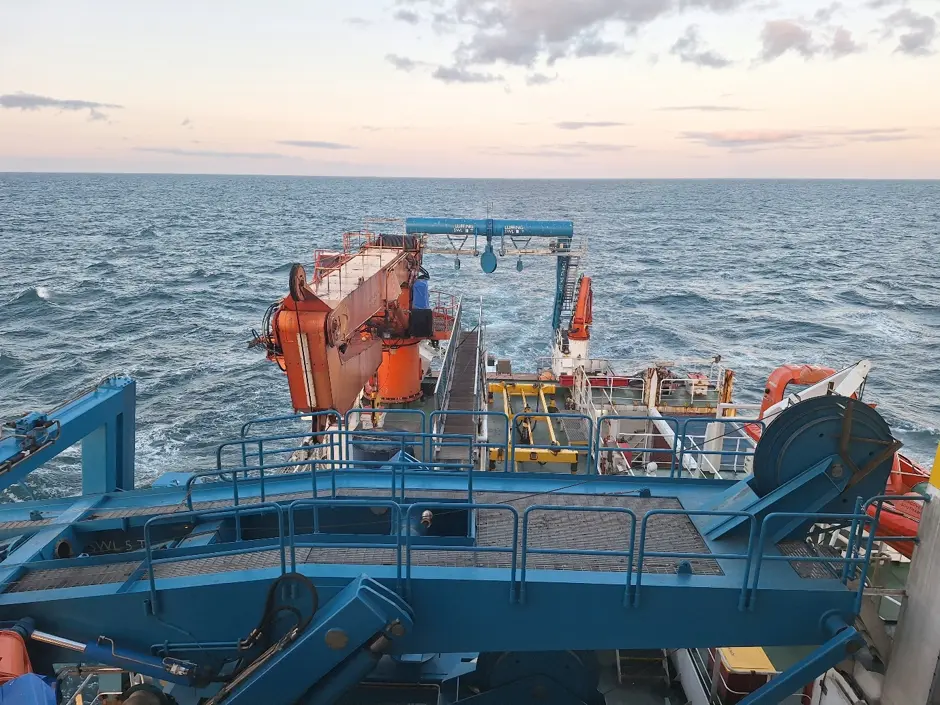
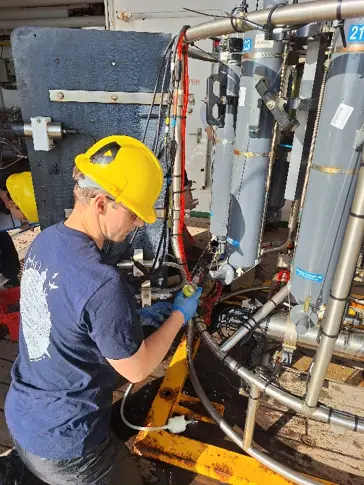
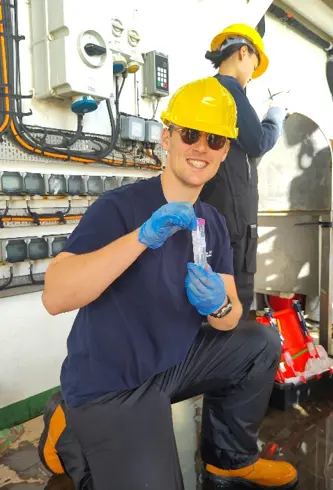
As part of my role, I help with the record-keeping for mooring recoveries and deployments, taking water samples (nutrients and salinity) from each CTD cast and assisting the chemists with their oxygen water sampling. I am also responsible for underway checks and water samples, and the data processing for both CTD and underway data (MATLAB). The underway checks entail ensuring all the underway data collection and computer systems are working well, taking a salinity sample and ensuring the chemists are alive in their lab!
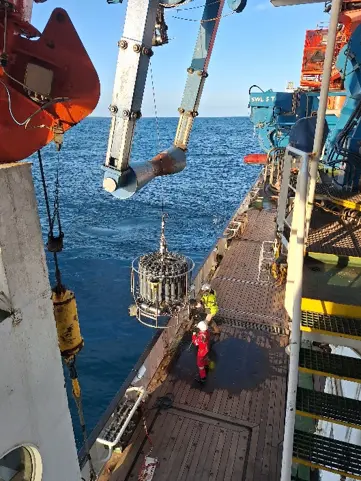
CTD stands for conductivity-temperature-depth and allows us to measure the temperature, salinity and depth of the water column as the CTD rosette descends and ascends from surface to deep depths. To get water samples, the technicians fire Niskin bottles (see photo of CTD rosette) at different depths, from which we then collect our oxygen, nutrient and salt samples. I have also assisted in deploying ARGO floats, which is an autonomous instrument that drifts with ocean currents and reports temperature and salinity within the upper 2000m of the ocean.
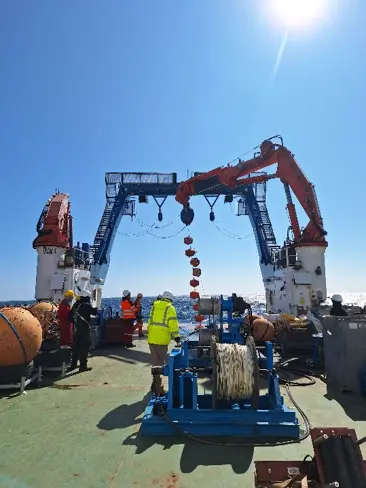
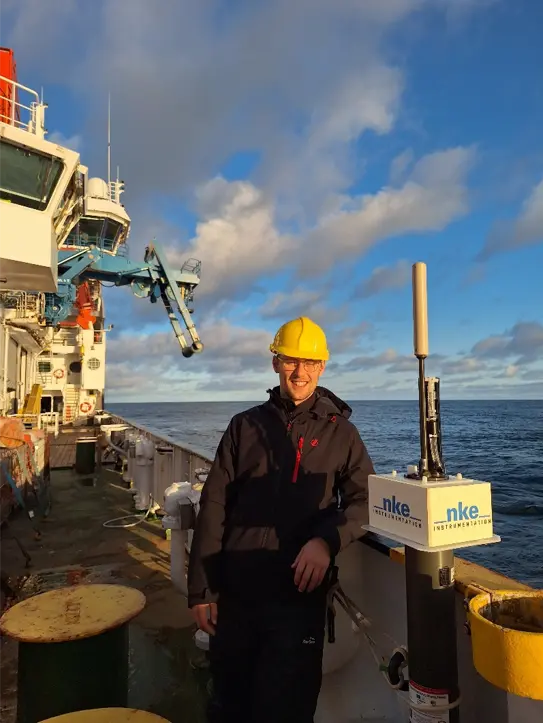
The cruise so far has been very enjoyable. For those of us who are on a cruise for the first time, it took a while to get our sea legs. However, I can confidently say I am now quite used to the rocking and the rolling of the ship alongside the regimented mealtimes! The food has been incredible (much to my colleague’s amusement, especially when they saw my surprise at how well pistachio ice cream and cherry pie go together) and there is even a gym you can work out in. I must add it still feels strange with the rock on the cycle machine or when doing lat pull-downs!
One of the highlights for me as a marine enthusiast is seeing hundreds of pilot whales, including babies splashing and doing back flips and adults spy-hopping to get a better look at me. I finally saw baleen whales after so many close misses! A pod of three minke whales surfaced next to the sunrise, and you could even see them from the breakfast window.
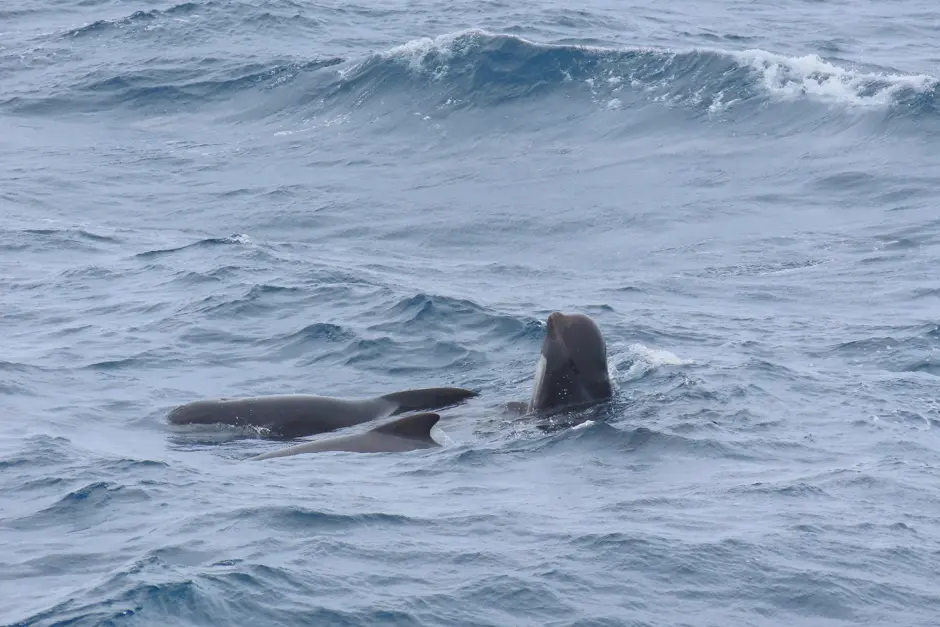
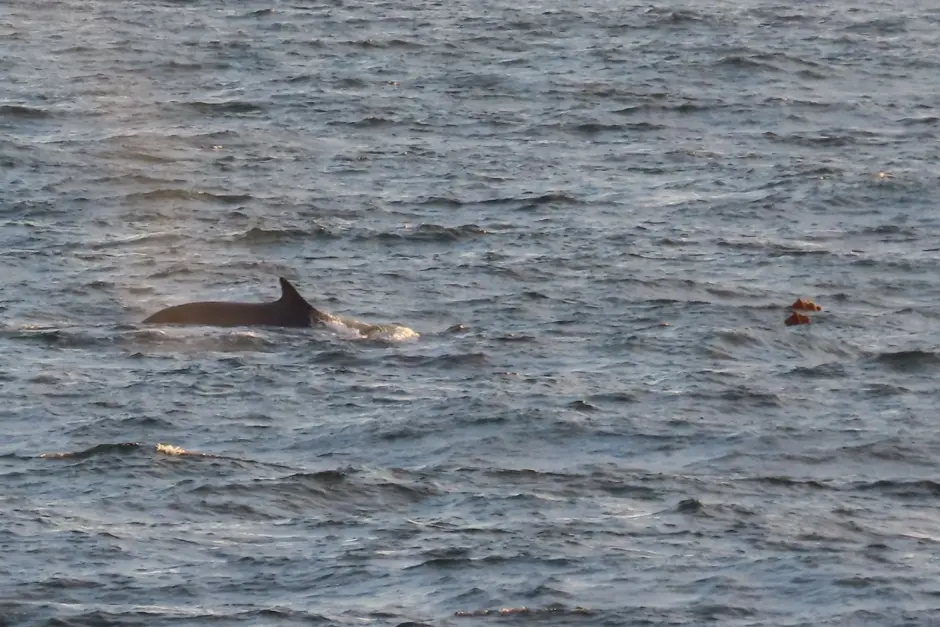
Photo Credit: Daniel Hampton
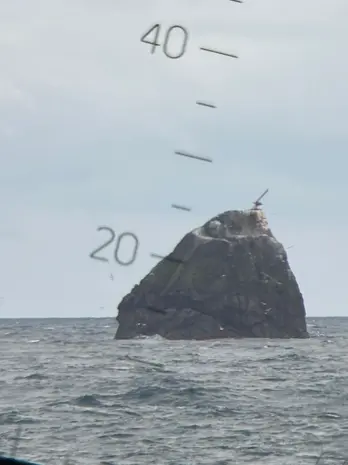
I have also seen pycnogonids (sea spiders) and sea urchins from the recovery of the mooring EB1 and a deep-sea coral (from 930 metres on mooring IB5), which were awesome. I really enjoyed transiting past Rockall Island (a 30-metre-high rock in the middle of the subpolar Atlantic) and have seen so many seabirds (fulmars, petrels and gannets).
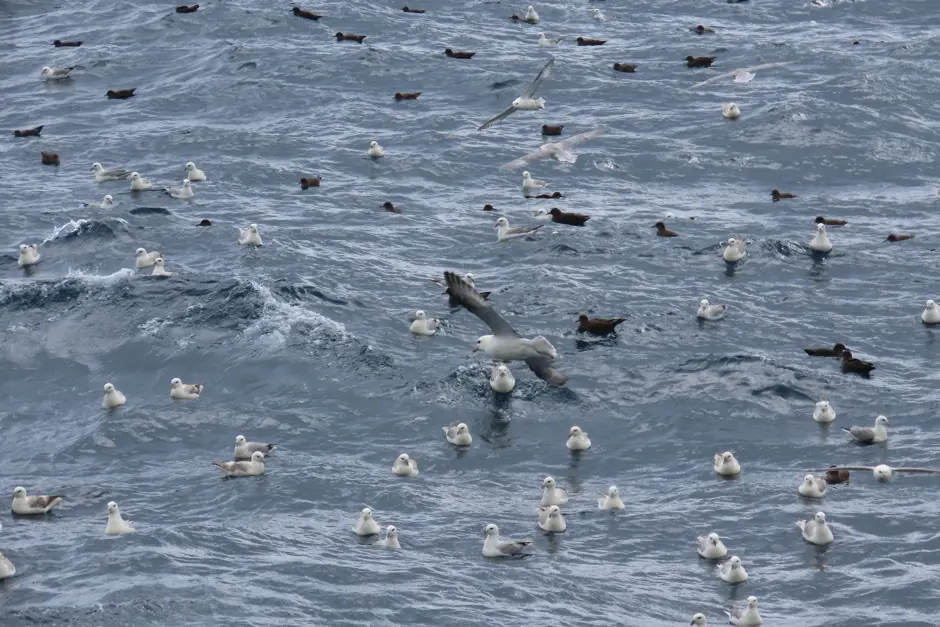
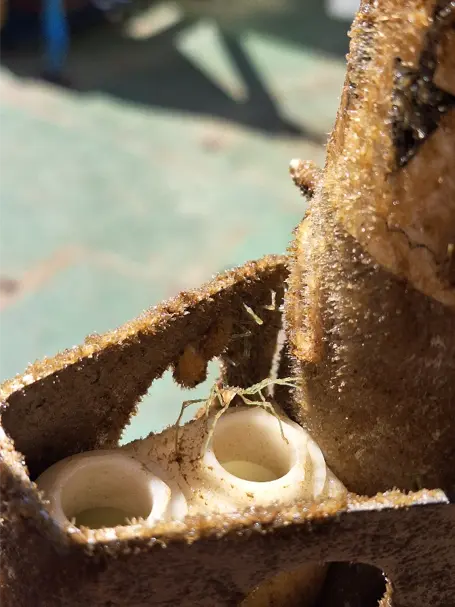
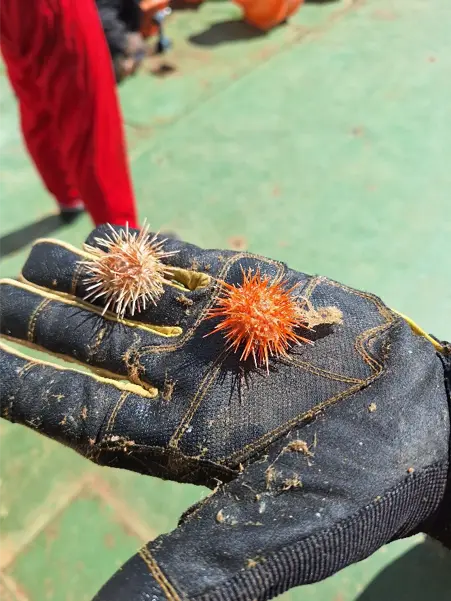
Photo Credit: Daniel Hampton
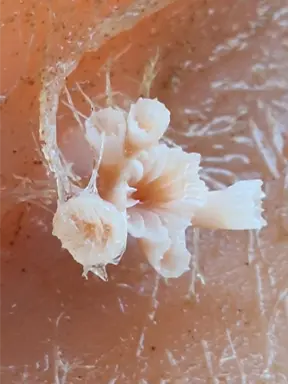
I am really enjoying my first cruise and am extremely grateful to the National Oceanography Centre (NOC), the Scottish Association for Marine Science (SAMS) and the berths of opportunity provided by the project AtlantiS. I also want to thank Adonis Blue Environmental Consultants and the Crown Estate for supporting my attendance at DY214!
DY214 and the Ellett Array are supported by the National Capability AtlantiS project. The Ellett Array is the UK contribution to the larger international OSNAP project that observes the Atlantic Meridional Overturning Circulation in the Subpolar North Atlantic.